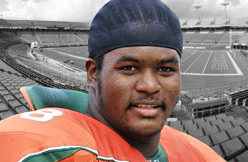
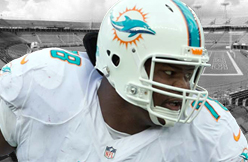
NEW ORLEANS – Six-foot-eight-inch Bryant McKinnie, towering above everyone else in the Superdome, smiled and shared a joke about his old college team.
"We used to say if one of us didn't get to the Super Bowl," the former Miami Hurricane and current Baltimore Ravens offensive lineman said Tuesday, "we'd all take a pay cut and play for the Dolphins."
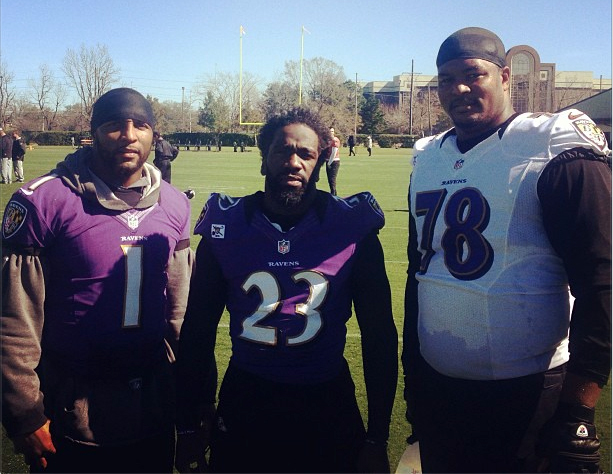
No need for that plan now. McKinnie and his Ravens teammate Ed Reed, another former 'Cane, will both play in Super Bowl XLVII on Sunday. So will Frank Gore, for the San Francisco 49ers. They were all on the same 2001 Miami Hurricanes roster that many consider the best collection of college talent of all time. And they are all stars.
In a league where the average career lasts four years, these three former college teammates continue to dominate more than a decade later.
And they're hardly alone.
That '01 Hurricanes team, which went undefeated and routed Nebraska in the BCS Championship Game, produced NFL players at just about every position. That Miami roster produced 17 first-round draft picks and 38 players were drafted into the NFL. Andre Johnson was on that roster. So was Vince Wilfork. So was D.J. Williams. So was Jonathan Vilma. So was Antrelle Rolle. So were Willis McGahee and Clinton Portis, who were both ahead of Gore on the depth chart. So was Sean Taylor, who was Reed's backup and made the Pro Bowl twice before being tragically killed in a home invasion. And so was 2012 Pro Bowler Chris Myers, who didn't start at Miami but logged significant playing time as a backup because, in his matter-of-fact words, "We were blowing teams out by 40 points." (That team's average margin of victory was actually 32.9 points.)
"Every now and then you get to coach a great one," says Tampa Bay Bucs head coach Greg Schiano, who helped recruit that Miami team and coached Reed before leaving for Rutgers in 2000. "That team was littered with great ones. I don't know that there will ever be a team assembled with all that talent again."
The heft of the credit for the millennium Hurricanes' success goes to Butch Davis, the head coach who assembled all that talent in one place before bolting to the NFL. "Butch Davis was an incredible, incredible evaluator of talent," says then-assistant Curtis Johnson, who is now at Tulane. Davis' legacy is mixed because of a two-pronged NCAA investigation at North Carolina that resulted in his firing, but in 10 years as a college head coach, he recruited dozens of future NFL players and more than 30 first-round draft picks. Most came at Miami.
"We were looking for athletic, speed guys who loved football," explains Schiano. That was a directive from Davis, who got his start coaching multiple sports and always looked for players who could excel at basketball, track, wrestling, whatever. "When you coach a lot of different sports," Davis says, "you start to appreciate a lot of skills and how they work together." He would assemble his staff in a film room, look at high school games, and wait for preps to "jump off the screen."
The recruiting ground in South Florida was fertile, but a lot of the stars on that 2001 roster came from elsewhere. Reed arrived from Louisiana. McKinnie came from New Jersey. Jeremy Shockey grew up in Oklahoma. Davis didn't much care for five-star guys as much as he wanted those three ingredients: athleticism, speed and love of football. For every Andre Johnson, who probably could have played in the NFL as a college freshman, there was an undersized talent nobody else saw. "Roscoe Parrish was a midget," says Curtis Johnson. (For the record, Parrish is 5-9.)
The "loved football" part was perhaps most important. Gore was a great example, as he came to Miami despite having to wait behind Portis and McGahee. Asked at Super Bowl media day Tuesday why he didn't shy away from that, Gore said, "Competition. If you want to be the best, you have to play with the best. I wasn't scared of competition."
Gore carried a football around campus in those days, held high and tight, because he knew his day would come. "He could care less about anything but school and football," says Mike Rumph, one of those 17 first-round picks. "Most guys are chasing girls, thinking about stuff at home. Not him. First day out to practice, most guys have special sleeves or new shoes. He's out there with no gloves. Just a jersey, shorts, and helmet. He was like Mike Tyson."
There were several players on the team with that mentality. "We had tackling going on in walk-throughs," says Curtis Johnson, and that was on purpose. Davis wanted practices to be more difficult than games, even if it meant grueling workouts and ferocious drills.
"The toughest battle was Tuesday, Wednesday and Thursday," says Schiano. "That's the thing I remember – the competition." Asked if it was as intense as the NFL, Schiano said: "In some ways even more so. At the U of Miami, we were trying to bring the program back. There was such a hunger there. That's one of the reasons they practiced so hard against each other."
Schiano remembers being disturbed in his office one spring by "a loud noise" and looking out the window to see a rowdy 7-on-7 game that included Michael Irvin, who had retired from football, and Sinorice Moss (Santana's younger brother), who was 15 at the time. Irvin, Ray Lewis and Warren Sapp had long since left campus, yet there was an unspoken expectation that the bar needed to be raised every single year. There's even a book written about the building and sustaining of the Miami program: Cane Mutiny.
"The level of work ethic was established," says Myers. "We wanted to keep that going. You wanted to prove to yourself you could keep doing what was done before."
Former players credit not only the strength coaches, but also the fact that the facilities weren't all that great. Today, major schools have professional-grade equipment. At that time, Miami had something resembling a boxing gym. That only seemed to motivate players more.
"It was the work ethic," Reed said Tuesday. "With the people we had, we tended to get the best guys."
It all culminated with a one-loss season in 2000, an undefeated season in 2001 and another one-loss season in 2002. But the 2001 team was especially dominant. The final score for that entire year, with point totals from all games added up, was Miami 512, Opponents 117.
"I really felt like we could have beaten the Cincinnati Bengals that year," says Rumph, who played five seasons in the NFL and now coaches at American Heritage High in Boca Raton. "It wouldn't be a blowout game!"
The most remarkable aspect of that team is only now coming into view. Nearly 12 years later, Gore is maybe the most dangerous player on the 49ers roster. The same could be said about Johnson in Houston, and Wilfork is a rare stalwart on a constantly rotating Patriots defense.
Yet when forced to pick a player or two from that '01 squad, two names come up: McKinnie and Reed.
Former 'Canes love to talk about the much-hyped matchup that season between "Mt. McKinnie" and defensive end Dwight Freeney, who starred at Syracuse and is building himself a Hall of Fame career with Indianapolis.
"Bryant is the best lazy player I've ever seen in my life," Rumph says. "He don't like to work out, his back is bothering him, that kind of thing. But even on his laziest day, he would not give up a sack. Dwight Freeney came to town, and Bryant literally rolled him down the field."
Miami beat No. 14 Syracuse that November day, 59-0.
While McKinnie is revered for his strength, Reed is awed for his smarts. The signature play from that championship season came when Miami struggled with Boston College into the fourth quarter and defensive lineman Matt Walters intercepted a pass deep in Miami territory. Reed raced up on his 270-pound teammate, ripped the ball out of his hands and ran 80 yards to the end zone. He was such a ball hawk that he forced his own teammate to fumble. "He had ball skills like an elite receiver and footwork like a top DB," Rumph says. "He was a coach on the field."
Davis, the architect of all this, admits he looks back at his Miami days wistfully. "In retrospect, obviously I would have loved to stay for eight, 10, 12, 15 years and maybe still be there," Davis says. "It was ridiculous how much success we had."
And it wasn't just on the field. Chuck Pagano was a secondary coach who left in 2000. Rob Chudzinski was an offensive coordinator. Schiano was defensive coordinator until the 2000 season. All three are now NFL head coaches.
In the college ranks, head coach Larry Coker is now the top guy at Texas San-Antonio. Mario Cristobal became a head coach at Florida International. Randy Shannon was in charge at Miami for a time. Curtis Johnson is now head coach at Tulane. Mark Stoops is head coach at Kentucky.
And Ken Dorsey, the quarterback on that unbeaten team, is now the quarterbacks coach for the Carolina Panthers.
Ironically, Davis has never reached that level of success again as a head coach. He struggled with the Cleveland Browns before leaving for North Carolina, which is now mired in scandal. Davis never won a national title as a head coach, but hopes to get one more shot. He's now an assistant with Schiano's Bucs.
Other lingering aspects of the Miami juggernaut are more subtle. Every time Myers gets ready to take the field for the Texans, he listens to the same song before he runs out into the din of the stadium: "In The Air Tonight," by Phil Collins. That was the song hand-picked by Davis to signal the entrance of the Hurricanes onto the field at the old Orange Bowl. He picked it to set a tempo and tone, but also to time a pregame stretch.
"The drum roll signified time to break down and go to the next phase of pregame," Davis says. "The tempo and mindset was now in place." Myers is not alone in his ritual. "Everybody still listens to that song before games," Myers says. "It brings me back to a little bit of Miami."
There is a little bit of Miami all over the NFL. In fact, there is a lot. And some of it will be on display in New Orleans on Sunday.
In fact, it's hard not to wonder how good those Hurricanes would have been if they could have experienced McKinnie's joke about playing together in the NFL: Gore, Portis and McGahee in the backfield, Johnson at wideout, Shockey at tight end, McKinnie blocking, Wilfork rushing, Williams at linebacker, Reed, Rolle and the late Taylor in the defensive backfield. And all those coaches.
Asked how good that team would have been in the NFL, Tulane's Johnson lets out a howling laugh before giving a one-word answer:
"Dynasty."

(sports.yahoo.com)





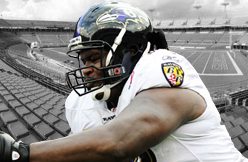
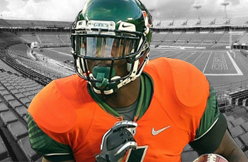
 and left tackle Bryant McKinnie.